
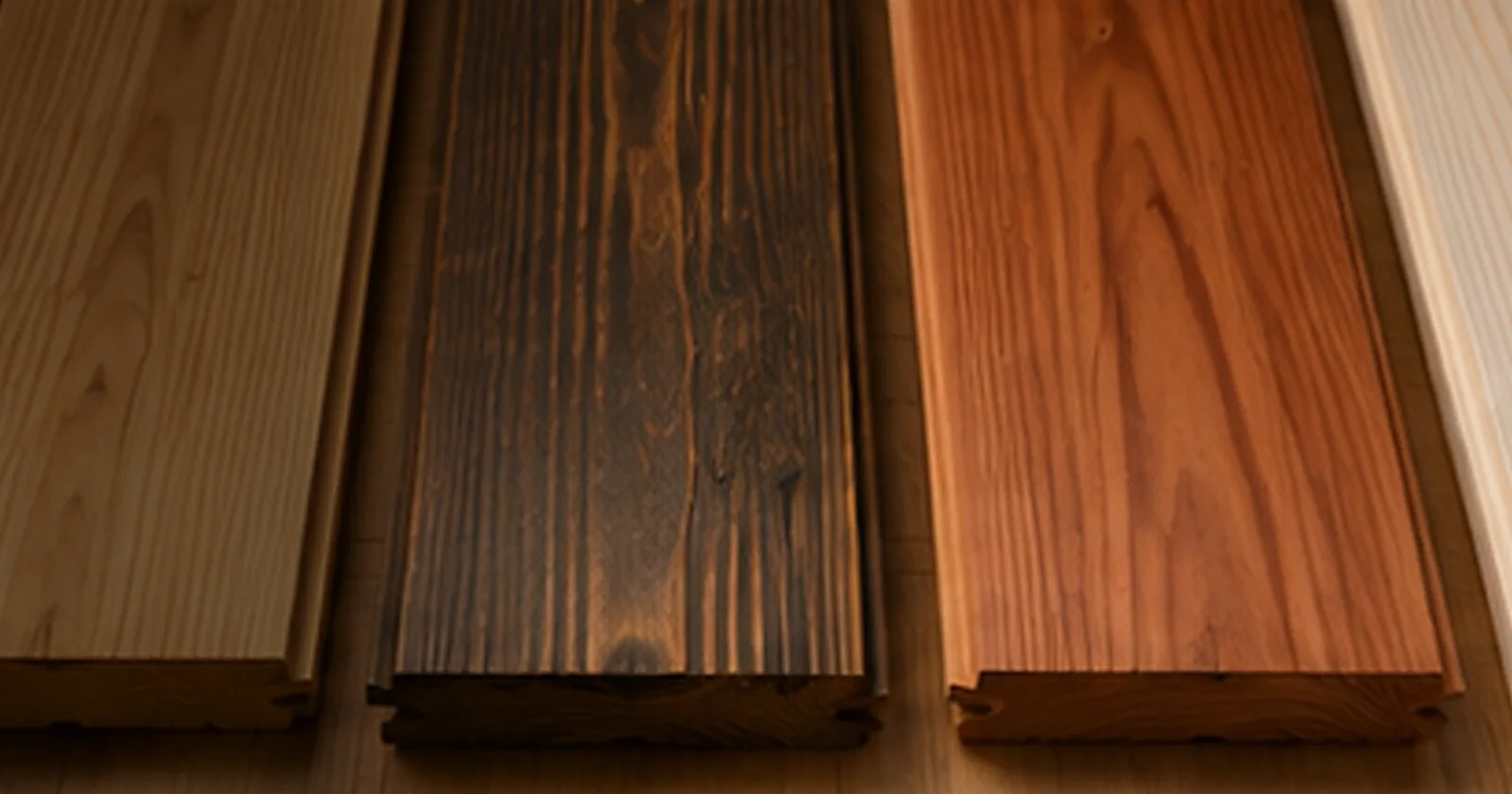
Timber choice is a smaller part of the budget than most people expect and a larger part of the experience. It also behaves differently here than it does in Finland.
Timber is rarely the biggest line on a sauna quote — the difference between a spruce cabin and a cedar one across a domestic room is usually a few thousand dirhams. But it is what you touch, smell and look at, and some choices genuinely fail in this climate.
Walls and ceilings
| Timber | Character | Verdict |
|---|---|---|
| Nordic spruce | Pale, fine grain, minimal resin, stable | The standard. Excellent value, hard to fault |
| Thermowood (spruce or pine) | Darker, very stable, rot-resistant | Best choice outdoors; a style choice indoors |
| Western red cedar | Warm red-brown, aromatic, naturally durable | Premium. Buy it for the scent and colour |
| Aspen | Almost white, no scent, no resin | Good where someone is scent-sensitive |
| Knotty pine | Cheap, resinous, moves with humidity | Avoid on visible surfaces |
Benches — a different requirement entirely
Wall timber has to look good and stay stable. Bench timber has to be touchable at 90 degrees while bare skin rests on it, which means low thermal conductivity and zero resin.
Aspen and abachi are the two correct answers. Both stay noticeably cooler than the air around them. Abachi is slightly softer and paler; aspen is marginally harder-wearing. Either is right.
Thermo-treated aspen costs more and offers a darker tone with slightly better durability. Reasonable if the budget stretches.
Anything resinous is wrong. This is the single most common mistake in cheap imported kits, and it is discovered the first time someone sits down in a hot cabin wearing a light-coloured towel.
What changes outdoors
An outdoor cabin faces UV, 48-degree summers, coastal salt and a humidity swing between February and August that moves timber considerably. Thermo-treated pine or spruce is the sensible default, cedar the premium option, and untreated pine will not survive whatever it costs.
External faces are oiled with a penetrating oil, re-applied annually. Never a film finish, for the same reason as inside: it peels under UV and traps moisture beneath.
What UAE conditions do to timber
The cabin interior runs at 90 degrees and 10 per cent humidity. The room outside it is air-conditioned to 22 degrees at moderate humidity. That gradient drives moisture through the timber every time the sauna is used and every time it cools down.
Which is why the vapour barrier matters as much as the timber does — properly lapped foil behind the cladding with a ventilated cavity in front, so the timber can dry from both faces. Get that right and spruce lasts decades. Get it wrong and no timber will save you. More on the build at Finnish sauna installation.
Looking after it
Wipe benches after use. Sit on a towel. Leave the door ajar afterwards so the cabin dries. Once a year, a light sand on bench tops and paraffin oil if you want it. That is genuinely the whole regime for an indoor cabin — one of the reasons saunas are so much less demanding than steam rooms. Outdoor cabins need the annual exterior oiling on top, covered by our maintenance contracts.
Common questions
What is the best wood for a sauna?
Nordic spruce for walls and ceilings, aspen or abachi for benches. That combination is the standard for good reasons: spruce is stable, light-toned and inexpensive; aspen and abachi have low thermal conductivity so they stay touchable at 90 degrees. Cedar is the premium wall option, chosen for its scent and colour rather than any performance advantage.
Why should benches never be pine?
Pine contains resin, and resin liquefies at sauna temperatures. Knotty pine bench tops will weep sticky resin onto skin and clothing within the first year. Pine is acceptable for structure hidden behind cladding; it does not belong anywhere a person makes contact.
What is thermowood and is it worth the extra?
Timber heat-treated to around 200 degrees, which removes the sugars and resins that feed rot and substantially reduces movement with humidity change. It is darker and more dimensionally stable than untreated spruce. For outdoor cabins in this climate it is genuinely worth it. Indoors it is largely an aesthetic choice.
Should sauna wood be varnished or oiled?
Never varnished, sealed or painted inside a cabin. A film finish traps moisture in the timber and blisters off at temperature. The only treatment that belongs inside is paraffin oil on bench tops, and even that is optional. Outdoor cabin exteriors are a different matter and should be oiled annually.
Does UAE humidity affect sauna timber?
Yes, more than people expect. The cabin is dry and hot inside while the surrounding building is air-conditioned and comparatively humid, and outdoors the seasonal swing is severe. That differential drives moisture movement through the timber continuously, which is why dimensional stability matters here more than it does in a Nordic climate, and why thermowood earns its price outdoors.